From the conference “Catalan in the Justice System” to a proposal for a permanent forum bringing together all Catalan-speaking territories
The conference “Catalan in the Justice System”, held on 7 November at the Centre Cultural la Llacuna in Andorra la Vella and organised at the initiative of Cultura Activa, brought together professionals and representatives from the legal and cultural sectors in Andorra, Catalonia and France. Beyond assessing the state of linguistic rights, the meeting raised a question that deserves reflection at a national level: what can Andorra, as a sovereign State, contribute to the future of the Catalan language?
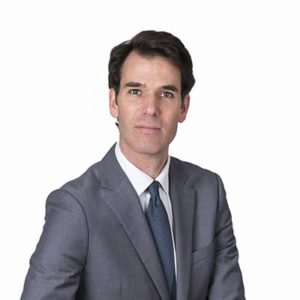
For AUGÉ LEGAL & FISCAL, the participation of our colleague Jonathan Hinkson, a lawyer and the firm’s Director of Business Development, was particularly significant. His presentation, “Catalan in the Legal Sphere: A Local and International Dimension”, advocated a perspective that went beyond the courts. A language is a fully fledged legal tool when it can be used to legislate, adjudicate, enter into contracts, arbitrate, protect trade marks and conduct international relations. Andorra demonstrates that all this can be done in Catalan as a matter of course and with full institutional strength.
Table of contents
ToggleThe decisive difference: having the tools of a State
In Catalonia, judge Guillem Soler highlighted a figure that is as revealing as it is concerning: only around 6.5% of judgments are written in Catalan. In France, as lawyer Elena Gaju explained, recognising regional languages as part of the country’s heritage falls far short of guaranteeing their routine use before the courts. Contributions from Xavier Antich, President of Òmnium Cultural, and other legal professionals showed that formal recognition and everyday practice do not always go hand in hand.
Andorra is in a unique position. It is the only sovereign State in which Catalan is the sole official language. The Constitution and Law 6/2024 enable Catalan to be the language of institutions, legislation and justice. Catalonia has institutions of self-government and co-official language status, but no State sovereignty; France, despite possessing the full tools of a State, does not grant Catalan that status. This difference does not make us superior to anyone: it gives us a responsibility and a capacity for initiative that we should know how to put to good use.
A shared language, a perspective embracing all territories
Catalan is the heritage of a cultural community spanning four States and very diverse realities: Andorra, Catalonia, the Valencian Country, the Balearic Islands, the Franja of Aragon, El Carche in Murcia, Northern Catalonia and Alghero, in Sardinia, as well as Catalan-speaking communities around the world. Each territory has different institutions, sensibilities, needs and legal frameworks. That is precisely why there is a need for a space that does not seek to make them uniform, but to listen to them and combine efforts.
The conference also offered practical examples of this cooperation, such as Compendium.cat, presented at the event, which facilitates access to legal language resources and document templates in Catalan. It is a good illustration of what can be built by sharing knowledge, while always adapting each tool to the relevant legal system.
The co-principality: eight centuries of balance between north and south
This role as a meeting point fits with Andorra’s history. Since the 13th-century Paréage agreements, our country has built its institutional continuity on a distinctive balance between two traditions and two figures: the Bishop of Urgell and the Count of Foix, in a historical succession that would eventually link the co-principality to the French head of State, now the President of the French Republic. Two profoundly different origins which, through the role of the co-princes, have helped preserve Andorra’s distinctive character. The 1993 Constitution recognises them as heads of State in their personal capacity and as a symbol of independence and of balance with neighbouring States.
Andorra is not a territory under French or Spanish tutelage: it is an independent State. Yet our constitutional architecture provides us with an exceptional institutional bridge to the north and south. Without confusing the powers of the co-princes with those of the French or Spanish governments, this link can facilitate cultural, legal and diplomatic dialogue on Catalan. What has helped us preserve a balance for centuries could now help us build connections between territories and legal systems.
Europe: turning a distinctive national feature into a shared opportunity
The European dimension adds a new perspective to this proposal. Andorra signed the Association Agreement with the European Union on 19 October 2026, although the ratification process has yet to be completed and the agreement is not in force. If it enters into force, it could expand the circulation of legal documentation and terminology in Catalan and give greater international visibility to the only State in which it is the sole official language.
The legal issues must, however, be distinguished: Andorra’s association does not automatically give Catalan official language status in the EU. That would require a change to the European language regime, a decision requiring unanimity among the Member States. Andorra has no vote in that Council, but it does have its own voice, diplomatic relations and institutional experience that can make it an outstanding ally for those working towards European recognition of the language.
A proposal emerging from the conference: the Andorra Forum for the Catalan Language
What if this conference were the beginning of something more permanent? We propose opening a debate on the creation of a permanent forum for cooperation in support of the Catalan language, based in Andorra. This would be neither a structure to replace existing organisations nor a platform for political confrontation, but a pluralistic meeting place for institutions, universities, professional bodies, cultural organisations, legal professionals and representatives of all the territories where Catalan is present.
Such a forum could promote an annual meeting in Andorra, establish a comparative observatory of linguistic rights, share legal and educational tools, promote digital resources in Catalan and develop constructive proposals for the European institutions. Above all, it would enable the same language, experienced in very different circumstances, to strengthen its capacity for cooperation and outreach without losing the richness of each of its accents and territories.
At AUGÉ LEGAL & FISCAL, we wish to acknowledge the work of Cultura Activa, the contributions of all the participants and, in particular, the international perspective that Jonathan Hinkson brought to the debate. This conference can be the spark for a shared ambition. Andorra does not have to speak on everyone’s behalf; it can open its doors so that everyone can speak, think and move forward together.
We have a language that unites us, institutions that distinguish us and a European opportunity that calls on us to act. Let us make Andorra a meeting point and a catalyst for the future of Catalan.